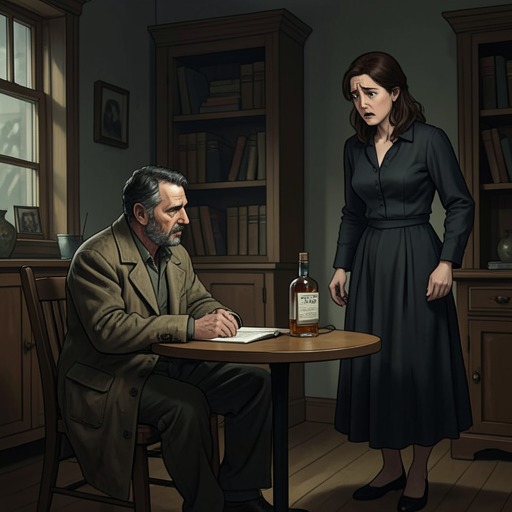
Annabella Wilmot
The Tenant of Wildfell HallAnnabella Wilmot is a socially admired and openly flirtatious young woman whose relationship with Arthur Huntingdon becomes a turning point in Helen’s marriage. First presented amid the company gathered at Mr. Wilmot’s house, she later appears at Grassdale in intimate company with Arthur; Helen’s discovery of their attachment exposes his betrayal and deepens the estrangement that precedes her attempt to leave him. Annabella’s later elopement and financial decline give her story a separate, bleak aftermath.
Identity and Introduction
Annabella is Mr. Wilmot’s niece. When Helen accompanies her uncle and aunt to a dinner at Mr. Wilmot’s, Annabella is described as about twenty-five, admired by the gentlemen, and notably flirtatious. She herself says she is too much of a flirt to marry, a claim that gives her a self-aware, provocative manner before her later marriage to Lord Lowborough becomes part of the plot.
At a later gathering, Annabella is among the company at Mr. Wilmot’s when Arthur arrives. Helen has been speaking with Milicent Hargrave, while Mr. Boarham is again trying to cultivate Helen’s attention. Arthur’s entrance changes the emotional focus of the room for Helen; Annabella’s presence in this social circle establishes the setting in which their relationship will take shape.
Courtship and Marriage
Annabella’s conduct toward Helen is pointedly competitive. When she approaches Helen with a smile Helen regards as unkind, she asks whether Helen is to become Mrs. Huntingdon. Helen answers yes and asks whether Annabella envies her. The exchange places Annabella within the social tensions around Helen’s engagement, though it does not by itself establish the later affair.
After Arthur and Helen marry, Annabella’s place in Arthur’s company becomes increasingly conspicuous. Helen finds her in her room, standing before the dressing table and examining herself in the mirror, with a gold-mounted whip in one hand and her riding habit lifted in the other. The scene makes Annabella’s presence in the household immediate and personal: she is no longer merely a socially admired guest but a woman whose proximity to Arthur troubles Helen’s marriage.
Affair with Arthur and Its Consequences
Helen’s diary records that on the night of October 4, Annabella had been singing and playing, with Arthur beside her as usual. This recurring arrangement matters: Helen presents their closeness not as a single accidental encounter but as a familiar pattern within the company around them. When Helen confronts Arthur about his conduct, she asks him to consider what his friend Lord Lowborough would think if he knew how Arthur had behaved toward Annabella. Arthur’s answer invokes violence against a hypothetical man who behaved similarly toward Helen, exposing a double standard between his possessive expectations and his own conduct.
Arthur later tells Helen that he no longer cares for Annabella and that he never loved any of the women in his past as much as he loves Helen. His reassurance does not undo the betrayal Helen has discovered. Rather, it sharpens the contrast between his professions of attachment and the conduct that has damaged her trust. Annabella’s relationship with Arthur is therefore central not because the text gives her a sustained account of her motives, but because it reveals the consequences of his infidelity for Helen and for the marriage.
Later Life and Narrative Significance
Annabella’s story continues beyond the affair. Some time before Arthur’s death, she elopes with another lover to the Continent. After a period of reckless living, the couple quarrels and separates. Annabella continues for a time in a lively, extravagant course, but as the years pass and her money dwindles, she falls into difficulty and debt. The account places her later decline alongside the consequences of her choices without presenting it as a direct resolution of the harm done to Helen.
The novel introduces Annabella through the language of social admiration and flirtation, then makes her significant through the unequal consequences of adultery within marriage. Her affair with Arthur is a catalyst in Helen’s recognition that affection and promises cannot secure fidelity. Her later fate, narrated briefly after the central domestic conflict, gives the reader an aftermath rather than a reconciliation: the woman who once drew admiration ends in financial trouble, while the damage her involvement helped expose remains part of the novel’s critique of marital conduct and gendered double standards.